
Notes From Psychick Albion
Ian Curtis

The following article was written six years ago on the occasion of 40 years since Ian Curtis’ passing. Time does, indeed, roll on relentlessly.
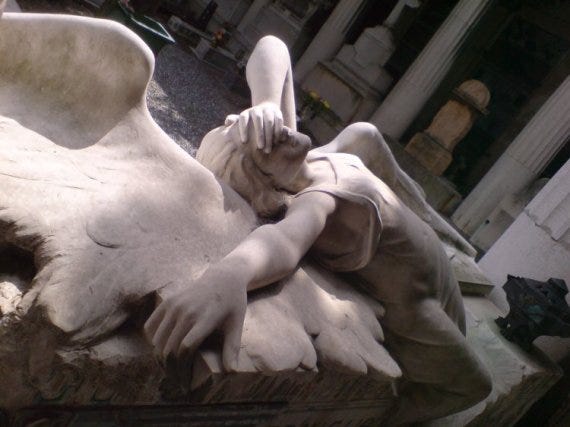
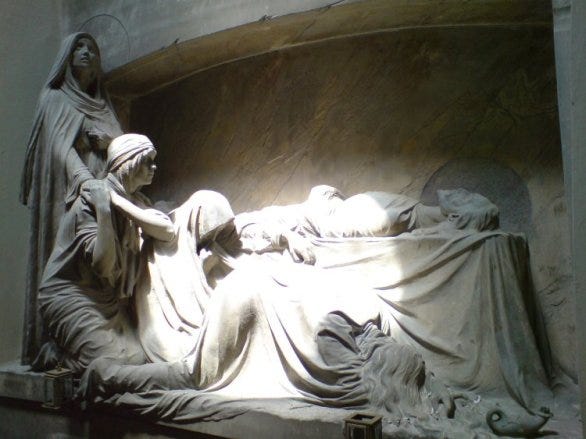
Decades. They roll on for those left behind but for those who are departed time stops and never gets going again. And everything seems to come back to the question of time in one way or another. The last three songs on Closer: ‘24 Hours’, ‘The Eternal’, ‘Decades’. Each a measure of time, each a reckoning with the passing years; the mystery of life always slipping through our fingers as though it were already a ghost. The sense that life is already bereavement. The statuary on the sleeves buying in to the gothic imagery but also insisting on an unending stasis. The final word: Still.
Forty years on and the mundane biographical details of Ian’s life have grown along with the mythologizing tendencies, the two in a symbiotic relationship, each escalating as time secures the retrospective importance of Joy Division. Once the vanguard of a post punk future, the preserve of students in long coats and John Peel listeners, now the subject of several movies and an industry of fashionable T-shirts. Each new biographical account adds a new perspective and renders the myth in clearer outline by attempting to demystify it. But it also feeds the myth because the myth doesn’t arise out of a misguided longing for the band to be something more than it really was; it arises from all of the facts of the band’s existence. Knowing that Ian’s death was caused by a cluster of motivations including his illness, his personal life, his medication, unfortunately doesn’t detract from the romanticism of the gesture. It should do. Those facts should demythologise and demystify his story and they should contribute to a more general shift away from romanticising young lives cut short (as Jon Savage argues in his foreword to Touching From a Distance). But we are trapped in a grim admiration for the ‘authenticity’ of the gesture. Sadly, at some unconscionable level, we sometimes suspect that he might have had the right idea.

If they had known what they were trying to do it would have all fallen apart. But in the instinctive and intuitive pursuit of something, they allowed for a spectral presence to settle onto their project and it has never left. When Bernard put Ian under hypnotic regression the results were silly: semi-hypnagogic pseudo-memories. But they didn’t realise that they had opened a door and that other things would pass through at a later date.
18th May 1992. Twelve years after the fact and living in High Hall at Birmingham University, I am developing a shallow interest in the occult and the mystical. Living in the building where they performed their last gig makes it almost obligatory that I will carry out an improvised ritual to see if any spectral traces remain. Result: a vague feeling of self-generated spookiness. There is nothing there at all.
Surely anyone reading through So this is Permanence, Ian’s collected lyrics and notebooks, must be struck by the fact that there is little here that stands out as enduringly brilliant. It all reads like half-baked ideas, fragmentary words that probably will never amount to anything. But it was in the performance that it all came together. It’s an obvious point, but song lyrics need to be heard in the context of the song rather than read on the decontextualized page. In Ian’s case there is an unusual gap between the uninspiring words on the page and the legendary power of the music and the voice. Something intervened between the intention and the execution that elevated everything to a higher intensity.
This is all, of course, just so much mystification; yet more pretentious words seeking to frame a fanboy’s precious feelings into a more high-brow niche. All true. But that points to an important element of Joy Division. They shared with many of their audience the working-class sense of exclusion from high-brow art. We were not brought up with such things and we were not equipped to gain entry to those distant worlds. Joy Division belonged to the estates, the high rises and the modernist cities, but they can’t be reduced to those things. Their project was characterised by a sense of seeking, of trying to find new forms that might fit with their partial glimpses of a gothic modernism. If the attempt to characterise what they achieved will always tend towards verbose grandiloquence, then that’s just because they sought a high poetry that they could not fulfil. But in that failure they made something better.
Try to look squarely at the meaning of Joy Division and it will disappear. It can only be glimpsed in peripheral vision. Try to express the meaning in clear language and the wispy tendrils will elude your grasp. The naïve lyrics won’t bear the weight of analysis but then neither will sightings of ghosts. The frisson remains, nonetheless. Ian conjured with the voices of non-being and managed to tune in to a few spectral transmissions for the last few years of the 1970s. The possibility of spectres holds open the possibility of life beyond death, of a reality of resurrection even after the death of God. So long as you are able to believe in such things, they offer hope.
18th May 2020. Forty years after the fact and sitting at a table in my bedroom thinking about the decades that are now gone. Looking back on the past is exactly like watching a cliched montage in a movie. The scenes replay and juxtapose until one day they will simply stop. Life is an open question subject to free will and free choice so long as it is yet to come. But once it has happened then it becomes a fixed certainty, which was always wholly deterministic. Ian overreached himself seeking high art in 70s Manchester, seeking a religious experience through secular nihilism, and the insistent drums, bass and guitar were enough to carry him along until they were no longer enough.
When the voices reveal themselves to be no more than minor autosuggestion, a whole cosmos of possibility slips away. The possibility of another world beyond this one is revealed as wishful thinking, a noble delusion. Eternity becomes inaccessible, as experience narrows down to a matter of a couple of decades. And the cosmos of the real is an incomprehensibly vast, empty blank. As the ghosts from beyond become unreal, so you begin to intuit that your own soul is itself a delusional spectre, a floating fantasy of identity that is no more real than the voices from the past. That way lies the madness of reality. But, if we approach it, we are fortunate to find that others have been here before us and left some traces.
Photos from Staglieno Cemetery taken from Joy Division Central (joydiv.org).
Woah, that opens up a space, albeit a temporal one, in me
Have always been caught between the etheral and mundane having grown up with Joy Division and never sitting comfortably with the narrative of a group of young lads on the piss, having a crack - something I simply didn’t want to believe. And then all that ‘Ian died for your sins’ bollocks that followed. To me there is simply nothing like those two albums, they sit for ever in a dark, neglected part of my mind cemetery as the ivy encroachment goes on. Eternal indeed. Thank you for sharing